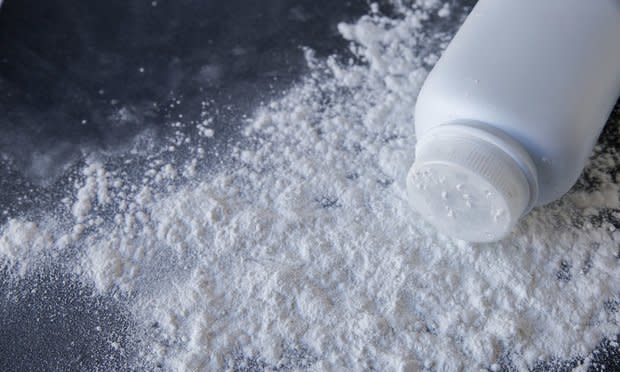
For decades, Johnson & Johnson marketed talcum-based baby powder as safe for routine personal hygiene use. Internal documents revealed in litigation tell a different story: company scientists identified asbestos contamination in their raw talc and raised concerns about cancer risk — information that was not disclosed to consumers.

Asbestos contamination in talc Raw talc is a naturally occurring mineral that is frequently found in proximity to asbestos deposits. Testing of Johnson & Johnson’s raw talc and finished products has identified asbestos fibers — including chrysotile and other forms — in samples. Asbestos is a known human carcinogen. The International Agency for Research on Cancer (IARC) classifies asbestos as carcinogenic to humans.
Talc particles themselves Independent of asbestos contamination, some research has examined whether talc particles themselves, when used in the genital area, can migrate through the reproductive tract and cause inflammatory changes associated with ovarian cancer development.
Ovarian cancer The primary focus of the mass tort litigation. Plaintiffs who used talcum powder in the genital area regularly over extended periods and subsequently developed ovarian cancer — particularly epithelial ovarian cancer — are the core claimant population.
Peritoneal mesothelioma Mesothelioma is a cancer of the tissue lining that covers internal organs, most commonly associated with asbestos exposure. Peritoneal mesothelioma affects the abdominal cavity lining. A December 2025 trial in Maryland produced a $1.5 billion verdict for a single plaintiff who developed peritoneal mesothelioma linked to talcum powder use.
Pleural mesothelioma Affecting the lining of the lungs, also linked in some
claims to talc asbestos contamination.