Talcum Powder and Ovarian Cancer — Lawsuit Lawyer in Georgia

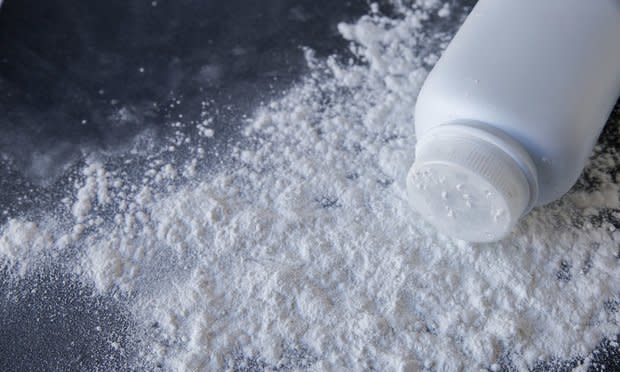
For decades, Johnson & Johnson marketed talcum-based baby powder as safe for routine personal hygiene use. Internal documents revealed in litigation tell a different story: company scientists identified asbestos contamination in their raw talc and raised concerns about cancer risk — information that was not disclosed to consumers.

If you or someone in your family used Johnson & Johnson talcum powder products and developed ovarian cancer or mesothelioma, Boyd Law Firm will evaluate your claim.

The Science Linking Talc to Cancer

Research examining the connection between talcum powder and reproductive cancers has accumulated over decades. In January 2026, a federal court overseeing the Johnson & Johnson multidistrict litigation ruled that expert testimony linking talc genital use to ovarian cancer was admissible, finding that the experts had applied reliable scientific methodologies.
Two primary mechanisms have been identified:

Asbestos contamination in talc Raw talc is a naturally occurring mineral that is frequently found in proximity to asbestos deposits. Testing of Johnson & Johnson’s raw talc and finished products has identified asbestos fibers — including chrysotile and other forms — in samples. Asbestos is a known human carcinogen. The International Agency for Research on Cancer (IARC) classifies asbestos as carcinogenic to humans.

Talc particles themselves Independent of asbestos contamination, some research has examined whether talc particles themselves, when used in the genital area, can migrate through the reproductive tract and cause inflammatory changes associated with ovarian cancer development.
Products Implicated

The litigation primarily involves Johnson & Johnson’s talc-based products, including:
  • Johnson’s Baby Powder (talc-based formulation).
  • Shower to Shower body powder.
Johnson & Johnson discontinued its talc-based baby powder for the U.S. and Canadian markets in 2020, citing “misinformation” and declining sales — while facing tens of thousands of active lawsuits. The company switched to a cornstarch-based formula. It did not recall the product.

Where the Litigation Stands

The Johnson & Johnson talc litigation is one of the largest active mass tort proceedings in the United States.
As of early 2026, the federal multidistrict litigation contains over 67,000 pending claims. Multiple attempts by Johnson & Johnson to resolve the litigation through subsidiary bankruptcy filings have been rejected by federal courts. In April 2025, a federal judge rejected the company’s $8 billion bankruptcy settlement proposal. A subsequent bankruptcy filing was also rejected.
Jury trials have resumed. Recent bellwether verdicts include substantial awards to plaintiffs who developed ovarian cancer and mesothelioma after regular talcum powder use. The litigation is active and ongoing.

Health Conditions Associated with Talc Exposure

Ovarian cancer The primary focus of the mass tort litigation. Plaintiffs who used talcum powder in the genital area regularly over extended periods and subsequently developed ovarian cancer — particularly epithelial ovarian cancer — are the core claimant population.

Peritoneal mesothelioma Mesothelioma is a cancer of the tissue lining that covers internal organs, most commonly associated with asbestos exposure. Peritoneal mesothelioma affects the abdominal cavity lining. A December 2025 trial in Maryland produced a $1.5 billion verdict for a single plaintiff who developed peritoneal mesothelioma linked to talcum powder use.

Pleural mesothelioma Affecting the lining of the lungs, also linked in some
claims to talc asbestos contamination.


Who May Have a Claim

You may have a claim if: – You used Johnson & Johnson talcum powder products — particularly Johnson’s Baby Powder or Shower to Shower — regularly, especially in the genital area – You subsequently developed ovarian cancer, peritoneal mesothelioma, or another cancer associated with asbestos exposure – The diagnosis occurred within the applicable statute of limitations period.
The strength of a claim depends on: the duration and frequency of talcum powder use, the type and stage of cancer diagnosed, the medical evidence linking the cancer to talc exposure, and available documentation of use.

How These Claims Are Handled

Talc ovarian cancer claims are pursued as mass tort litigation — individual plaintiffs with similar injuries coordinated for efficiency in discovery and expert development, while each plaintiff’s damages are determined individually.
Boyd Law Firm evaluates individual claims and, where appropriate, works with co-counsel in the established MDL litigation to ensure claims are filed correctly and individual damages are fully documented.

Frequently Asked Questions About Talc Lawsuits

Filing deadlines (statutes of limitations) typically run from the date of diagnosis or death, not from when the exposure occurred. Many claims are still within the filing window. Because the litigation is active and moving, time matters. Contact us for an evaluation of your specific situation.
Federal courts have rejected multiple J&J attempts to use subsidiary bankruptcy to resolve these claims. As of early 2026, the litigation is proceeding in federal court. The bankruptcy strategy has not succeeded in blocking plaintiff recoveries.
Long-term, regular use — particularly in the genital area over years or decades — is the typical profile in successful claims. We evaluate the use history as part of the claim assessment. Duration and frequency of use affect claim strength but there is no fixed minimum.
Few people kept receipts for baby powder purchased over decades. Use can be established through testimony, family recollection, medical records documenting patient history, and other means. Documentation of use is important but need not be through purchase records.
Medical expenses for cancer diagnosis, treatment, and ongoing care; lost wages and earning capacity; pain and suffering; and in cases involving death, wrongful death damages. The litigation has produced verdicts in the hundreds of millions to over one billion dollars. Individual recoveries depend on the specifics of the injury and claim.

Free Consultation
No Fee Unless We Win

If you or a family member used talcum powder products and developed ovarian cancer or mesothelioma, the time to evaluate a claim is now. Filing deadlines apply and the litigation is active. The consultation is free, there’s no obligation, and you pay nothing unless we win your case.

Enter Your Details Below
To Get A Free Case Evaluation